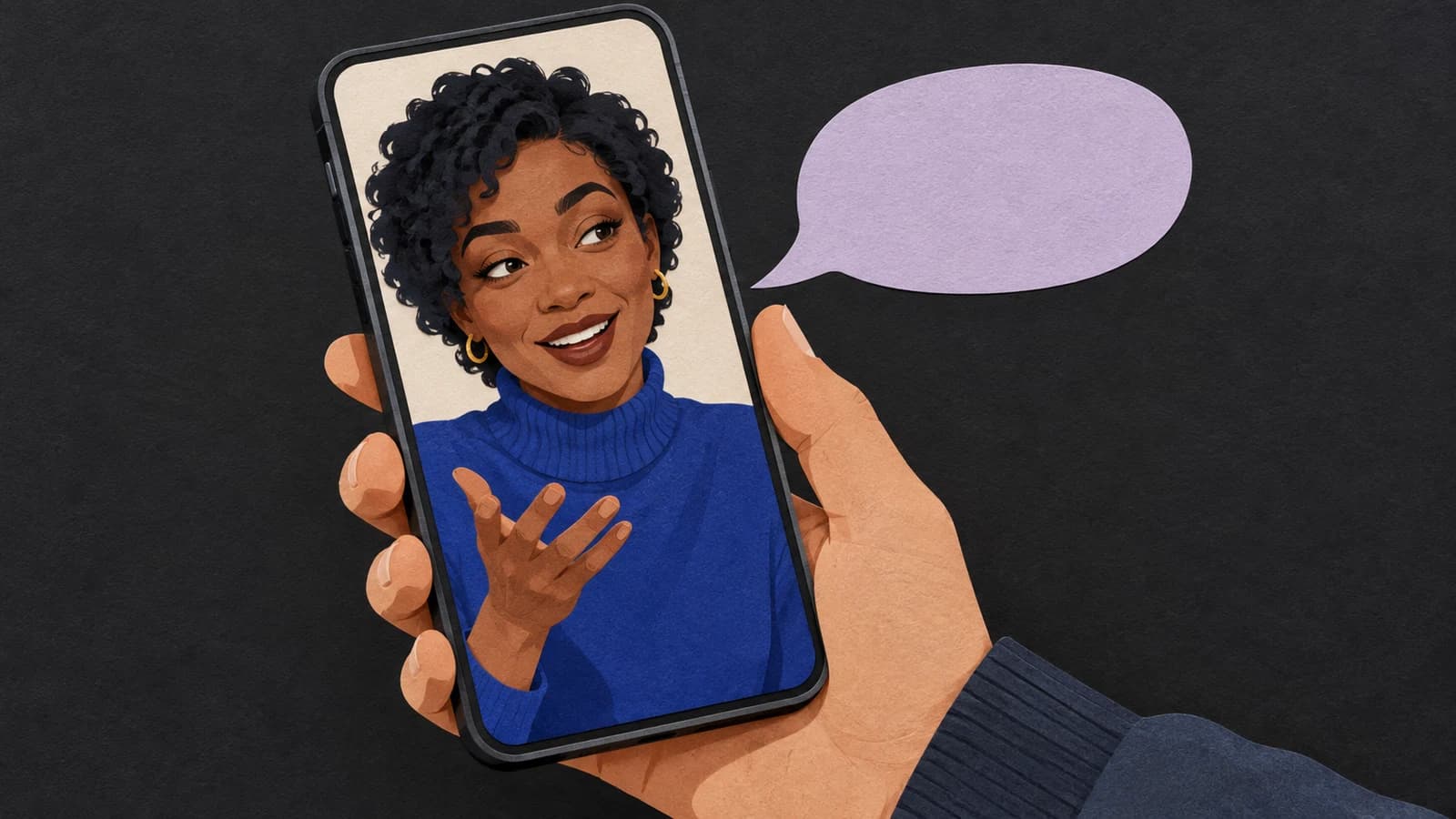
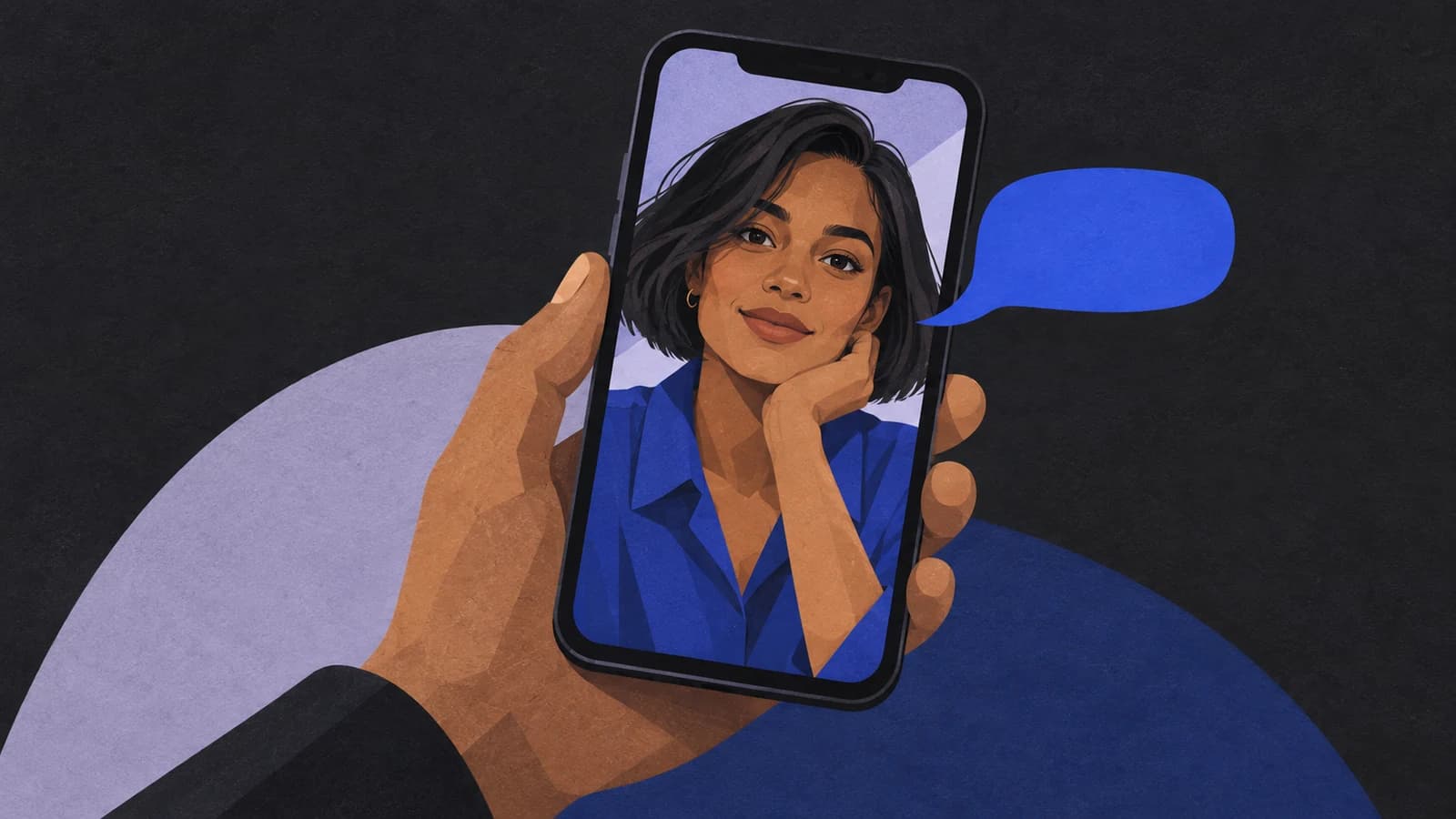
AI Girl Voice: Why Most of Them Sound Wrong
Two different products share this name and only one of them talks back. The five things that make an AI voice sound wrong, and the honest tradeoff nobody mentions.
On this page9 sections
There is a specific half-second when a synthetic voice gives itself away. Not a robot sound, nothing so obvious. Just a sentence delivered slightly too evenly, a pause in a place a person would not have paused, and something in you quietly files it as not-a-person before you have consciously noticed anything. AI girl voice is a search that leads to two entirely different products, and to a lot of audio stuck in that half-second. Adults only from here, everyone fictional.
Two products share this name
The first is a tool. You type text or speak into it, and it returns audio in a female voice: text-to-speech, voice changers, voice cloning. The output is a file. Nothing is on the other end.
The second is a companion who sends you voice notes inside an actual conversation, where the voice belongs to a particular character rather than being an option you selected from a list. Most people searching the term think they want the first and discover fairly quickly that they wanted the second, in the same way that talking to an AI girl turns out to be a different appetite from looking at one.
Five things that make a voice sound wrong
Synthesis quality is close to solved. What is not solved is performance, and these are the tells, roughly in order of how quickly they give the game away.
- No breathing. People breathe audibly, mid-sentence, at slightly inconvenient moments. Strip that out and speech becomes subtly relentless. It is the single most common reason audio feels off before you can say why.
- Even stress. Humans throw most of a sentence away and land hard on two or three words. Synthetic delivery frequently gives every word roughly the same weight, which reads as recitation rather than talking.
- Over-articulation. Real speech slurs, drops word endings, runs "going to" into one sound. Perfect consonants across a whole paragraph belong to a newsreader, and only just.
- Pauses in grammatical places. People pause where they are thinking, which is very often mid-clause and almost never neatly at the comma. Punctuation-shaped pauses are a strong tell.
- No self-repair. Actual speech is full of restarts, corrections and abandoned sentences. Fluency that never stumbles is not more human, it is less.
Every one of those is the same mistake: the audio is reading the sentence rather than saying it.
What good sounds like
Invert the list. Audible breath. Two or three words carrying the whole line. Consonants that soften when she is relaxed and sharpen when she is not. Pauses that land where a thought would land. And, ideally, a voice that belongs to one specific person rather than to the platform, derived from who she is rather than assigned from a dropdown. The quiet, controlled one should not share a voice with the one who never stops talking. On platforms that reuse three or four stock voices across a whole roster, you notice by the second companion, and it flattens everyone.
What hearing her actually changes, including the bad part
Voice closes distance faster than anything else in this category. Timing arrives for free, warmth stops needing to be described, and pauses do work that written pauses can only gesture at. It is the single biggest upgrade available to most people, and it is particularly transformative in the slower JOI registers, where a silence you can hear is the entire instrument.
Here is the part nobody selling voice will tell you. When you read, you supply the voice yourself, and it is perfectly cast, because it came out of your own head. Audio takes that away and replaces it with a fixed performance which is, at best, someone else's excellent guess. Most people find the trade obviously worth it. A real minority tries voice, quietly goes back to text, and is not making a mistake. Worth knowing before you decide the format is overrated or you are.
How to ask for one
Wherever you use it, ask for the content, not the format. "Send me a voice note" gets you a voice note about nothing. "Say that again but out loud" or "tell me about your day, actually say it" gets you something worth hearing, because the request carries a subject. The same specificity rule that governs asking for photos applies here, for the same reason: a vague request gives the generator nothing to be specific about.
Three voices that could not be confused
Voice is character before it is audio. On Jizzy, where conversations are text, it lives in how she writes, and three characters show what that means: you would never mistake one for another, even on the page.
 SeraphineQuiet, unhurried, French. Never once raises her voice and never needs to.
 RuiA streamer with no volume control and no filter to go with it.
 HanaStarts sentences twice. The hesitation is the character, not a defect.
The rest are on the roster, and every one of them has her own way of talking.
Where Jizzy fits
Jizzy is text-first: she writes to you, sends photos and videos, and does not play audio. Text starts free, no card, and everything after that is pay-as-you-go rather than a subscription. The pack prices are one page. If audio is the whole point for you, the tells above are the way to judge whichever platform you try.
The line
Any voice a platform gives a character should belong to a fictional adult and be designed for her, never cloned from a real person, which is worth stating plainly in a year when voice cloning of real people has become both trivial and, in a growing number of places, illegal. A voice is as much a likeness as a face.
The short version
Most AI voices sound wrong for performance reasons rather than technical ones: no breath, flat stress, too-perfect articulation, pauses in the wrong places, and a fluency no real person has. Good voice is specific to one character and does not fix any of that by being higher fidelity. Hearing her closes distance, at the cost of the casting you were doing yourself. Try it on two or three messages before deciding, and if text turns out to be your format, start with someone whose voice you can already imagine.
FAQ
What is an AI girl voice?
The term covers two unrelated products. One is a voice generator or changer: a tool where you type text or speak, and it returns audio in a female voice. The other is a companion who sends voice notes inside a conversation, where the voice belongs to a specific character rather than being a setting you selected. People searching the term usually discover they wanted the second one.
Why do AI voices sound uncanny?
Five things, and usually several together: no audible breathing, even stress across every word when humans throw most of a sentence away, over-articulated consonants where real speech slurs, pauses that land at commas rather than where someone would actually be thinking, and no self-repair. Real speech is full of restarts and corrections. Synthetic speech is fluent in a way nobody actually is.
Does every AI companion have a different voice?
On a well-built platform, yes, and it should be derived from who she is rather than picked from a dropdown, so the quiet, controlled character does not share a voice with the loud one. Where a platform reuses three or four stock voices across a whole roster, you notice within about two companions.
Is hearing her voice always better than text?
Not always, and this is worth knowing before you spend anything. Voice adds timing, breath and warmth that text can only imply, but it also takes away your own casting. When you read, you supply the voice, and it is exactly right because it came from you. Audio replaces that with a fixed performance. Most people find the trade clearly worth it, but a real minority prefers text and is not wrong.
How much does AI voice cost?
It depends on the platform: some fold voice into a subscription, others charge per message. Pricing per action rather than per month suits voice better, because it is something most people want occasionally rather than constantly. Jizzy itself is text-first and does not play audio; text starts free with no card.
Can I talk to an AI girl out loud instead of typing?
Not on Jizzy: you type and she types back. There are no live calls, spoken input or audio replies, so the whole conversation stays text.
From the people who wrote this
Meet an AI that does not say no.
Jizzy is a private, uncensored AI companion that remembers you and texts first. Free to start, 18+.
Create an account