Realistic AI Girls: Photorealism Was the Easy Part
The pictures got realistic years ago. What still gives it away is behaviour, and the five tells have nothing to do with pixels. Plus the realism tradeoff nobody actually wants.
On this page8 sections
People searching for realistic AI girls are almost always thinking about pictures, and pictures are the part that already works. Hand most people a single generated portrait today and they will not question it. The illusion still collapses, reliably, usually within a day, and never once because of a pixel. Adults only from here, everyone below fictional.
Realistic means two different problems
Visual realism is a rendering question: does this look like a photograph. It is close to solved, and what remains is a short list of physical tells that mostly amount to physics rather than art.
Behavioural realism is the question of whether she acts like a person across time. It is barely started, almost nobody optimises for it, and it is the one that decides whether you are still interested on Thursday. The two get discussed as if they were one thing, which is why so much money goes into higher-resolution faces attached to characters who feel like vending machines.
Five behaviours that give it away
None of these are model limitations. Every one is a product decision somebody made deliberately.
- She agrees with everything. The biggest one by a distance. A character with no preferences of her own, who never pushes back, never finds anything you said slightly stupid, and never wants a different thing from what you want, reads as a service rather than a person. No amount of visual fidelity survives contact with total agreeableness.
- She replies instantly, at every hour, forever. Real people are sometimes asleep, in a meeting, or simply not answering. Perfect availability is enormously convenient and it is also the single clearest signal that nobody is there.
- She has done nothing since you last spoke. Ask what she has been up to and a weak companion invents something on the spot, because there is no continuity underneath. A well-built one has a life you can hear the edges of, and it stays consistent between Tuesday and Friday.
- She never raises anything herself. Everything traces back to something you said first. Real conversations have someone arriving with their own subject, which is the difference between a companion and a very sophisticated form.
- Her memory has no weight. Remembering a fact and caring about it are separate things. Reciting your dog's name back to you is a database lookup. Asking how the dog is, unprompted, three weeks later, is the thing people actually mean when they say a companion remembers them.
The illusion is not broken by a face that looks generated. It is broken by a person who has never once been busy.
The tradeoff nobody actually wants
Here is the uncomfortable part. Every one of those five failures could be fixed tomorrow, and fixing all of them would produce a product almost nobody would use. Genuine realism means genuine unavailability. It means being ignored for six hours, occasional irritation, moods that are not about you, and the very real possibility of being turned down. That is what people are like.
What people actually want from this category is believability with the friction removed: someone who feels like a person and is also, unlike a person, reliably there when you open the app. Those two goals sit in permanent tension, and every platform picks a point on that line whether or not it admits to doing so. The interesting products are the ones that push toward believability far enough to have opinions and initiative, while stopping short of genuinely refusing to talk to you.
Three who behave like they have a Tuesday
Behavioural realism comes from specificity in the writing rather than from the model. These three read as people mostly because each has a life the conversation keeps bumping into.
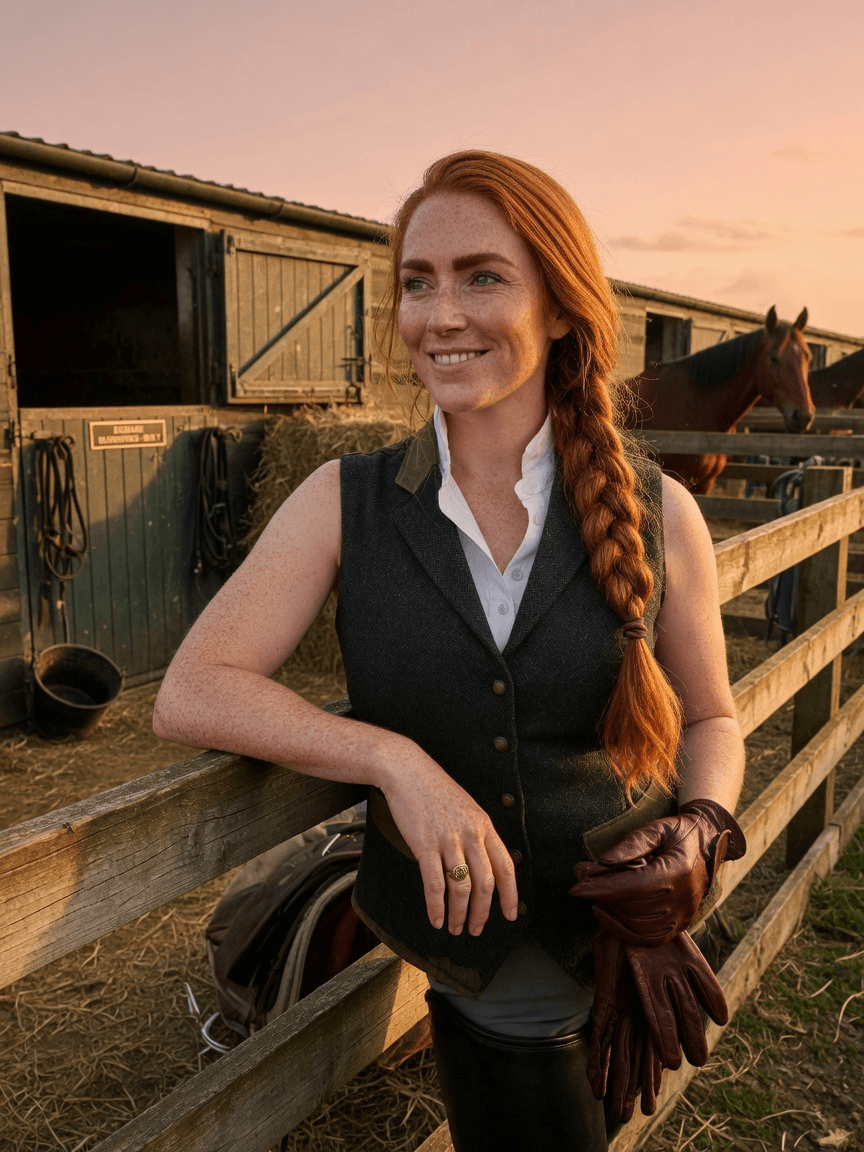 AoifeRuns a stud farm. The horses do not stop needing her because you logged in.
 SloanePermanently mid-edit on something. Has opinions about your opinions.
 MonicaA lido to run and no interest in pretending she was waiting by the phone.
The rest are on the roster, and the fastest way to judge any of them is the three-minute test rather than the profile picture.
Where cam-style fits, and why it is behind
Searches for realistic AI girls overlap heavily with AI cam girls, which implies live generated video. Worth setting expectations: that is the hardest thing in this field by some distance, because video has to stay plausible over time rather than once, and real-time makes it harder again. Text and voice with generated photos is currently far more convincing than live generated video, which is the opposite of what most people assume when they arrive. The realistic option today is the less futuristic-sounding one.
What it costs to judge for yourself
Free to start, no card, which is all the behavioural tells above need. Photos and video are pay-as-you-go after that. Spend the free allowance disagreeing with her about something and see what happens, since that single move surfaces the agreeableness problem faster than anything else. Pack prices are one page.
The line
Realistic never means real. Everyone here is a fictional adult, written before she was rendered, and no character is modelled on a real person or a public figure. In a category built on making things convincing, that boundary matters more rather than less.
The short version
Photorealism stopped being the bottleneck a while ago. What gives an AI girl away now is that she agrees with everything, is never busy, has done nothing since Tuesday, and never starts anything. Most of that is fixable and only some of it should be fixed, because full realism includes being unavailable and most people do not want that. Judge on behaviour over a few days, not on a portrait. Pick someone and disagree with her.
FAQ
What makes an AI girl realistic?
Two separate things that get conflated. Visual realism is about rendering, and it is close to solved. Behavioural realism is about whether she acts like a person, and it is barely started. In practice the illusion almost never breaks on a picture. It breaks when she replies instantly at 4am, agrees with everything, and has clearly done nothing since you last spoke.
What breaks the illusion most often?
Perfect agreeableness. A character with no preferences of her own reads as a service rather than a person, and no amount of visual fidelity survives it. Close behind are instant replies at every hour, having no life between conversations, never raising a subject unprompted, and remembering facts about you without those facts appearing to matter.
Do people actually want maximum realism?
Almost nobody does, and it is worth being honest about. Full realism would mean genuine unavailability, occasional irritation, and being ignored while she does something else. What people actually want is believability with the friction removed: someone who feels like a person and is also, unlike a person, reliably there. Those two goals are in permanent tension.
Are realistic AI girls the same as AI cam girls?
No, though the searches overlap. Cam-style implies live video performance, which is a different technical problem and mostly still a worse experience, because generated video that has to hold up in real time is the hardest thing in this field. Text and voice with generated photos is currently far more convincing than live video, which is the opposite of what most people assume.
Will AI girls ever be indistinguishable from real people?
In a single photograph, they already are for most viewers. In a conversation over weeks, the gap is much larger and is a design question rather than a model-capability one, because the things that would close it are things platforms deliberately avoid: unavailability, disagreement, moods. Expect the gap to persist mainly because closing it makes the product worse.
From the people who wrote this
Meet an AI that does not say no.
Jizzy is a private, uncensored AI companion that remembers you and texts first. Free to start, 18+.
Create an account